South Carolina FYI

Menu
  • What’s Trending
  • Featured
  • Eat & Drink
  • News
  • Guest Columns
  • Submit Your Thoughts

Santee Cooper news

News

McMaster Pushes To Re-open Schools This Fall

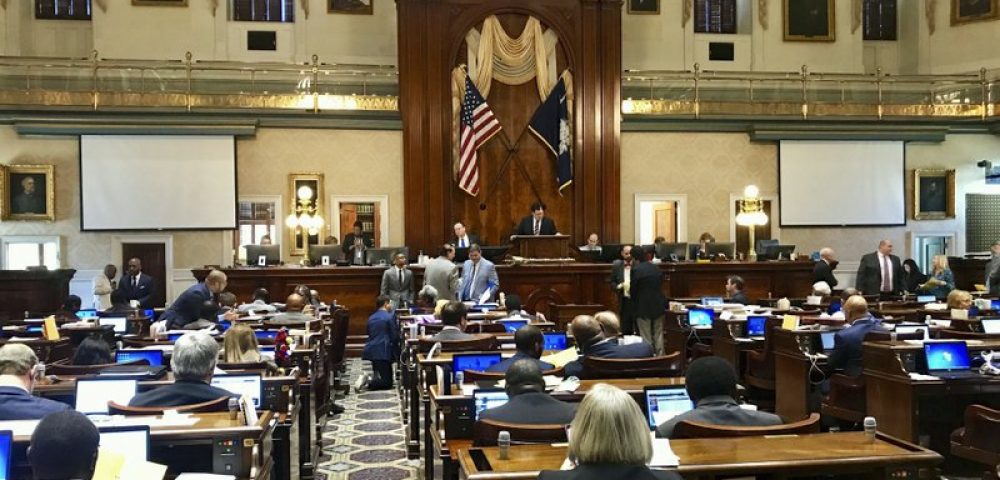
On Wednesday, July 15th, Gov. Henry McMaster joined by his fellow Republican House and Senate leaders executively decided that SC schools will re-open for in-person teaching. This press statement comes as COVID-19 cases continue to surge in the state. The district schools are being pushed to re-open with the option to choose between virtual learning and face-to-face learning.

McMaster says that “the classroom is one of the safest places to be,” in response to fear over Coronavirus. These plans are being made as the state believes that virtual education is not enough. Each district ultimately can decide a plan for themselves, yet now there must be an option that includes sending kids to school five days a week. As of 2019, SC schools remain #48 in state education across the country. It’s likely that the recent changes in schooling could impact the education kids receive. “What we need to do is take every step at our disposal to get kids back to schools,” McMaster said.

With this push to re-open comes a push for start dates to be halted. McMaster asks that schools consider beginning classes after September 8th, in addition to creating options for online and in-person learning.

There has been no official statement from SC school boards regarding final decisions for the upcoming fall semester. In the next few weeks, it’s possible we will see districts announcing plans that rotate between in-person and online classes.
  • Share
  • Tweet
  • Email

News

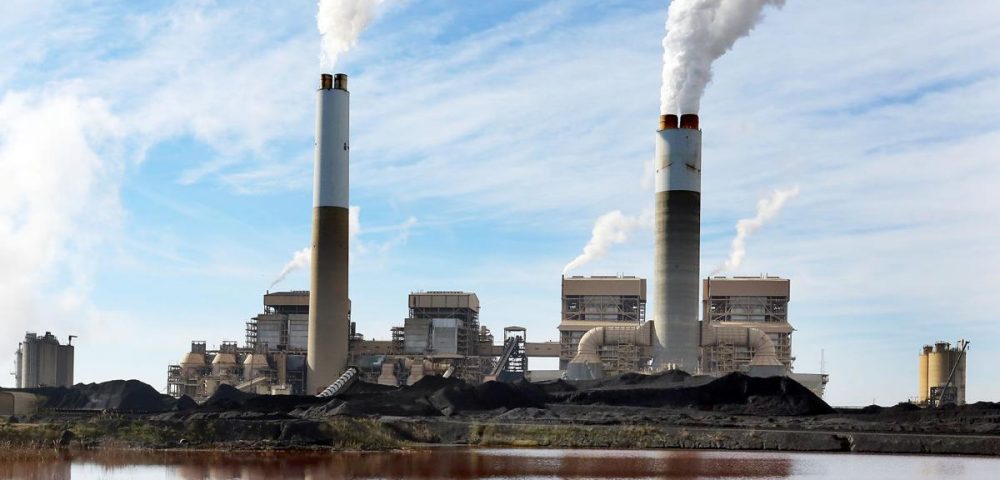
Lawmakers Could Focus On Other Issues If A Speedy Decision Is Made On Santee Cooper

Featured Image: AP News

People from all over the country are flocking to cities across the state of South Carolina. In fact, the Upstate expects to have a population roughly the size of Charlotte’s in just 20 years.

Organizations like the Upstate Chamber Coalition are already preparing for the huge surge in population, specifically the need for new jobs, housing, modern infrastructure and an education system that can handle the influx of families.

Jason Zacher, the executive director of the Upstate Chamber Coalition, recently stopped by an event at Lee’s Barbecue in Waterloo, South Carolina to discuss the pressing topics lawmakers need to focus on for the upcoming legislative session. With the session beginning in January, Zacher brought up issues such as pension reform, import-export bank restoration, and the state-owned utility Santee Cooper.

With more pressure than ever on lawmakers to make a decision as soon as possible on the state-owned utility, Zacher went on to say “We’ve supported the sale of Santee Cooper because of the potential statewide budget impact. If we end up having to absorb the debt that Santee Cooper has, that is debt service that cannot be used for higher teacher pay, it cannot be used for infrastructure, it cannot be used for name your program that needs to be funded.”

While much of the focus has been on Santee Cooper’s almost $7 billion of debt, there are other factors to consider. The V.C. Summer project began a decade ago and started to fail several years ago. Since then, lawmakers have spent two years talking about what to do with the state-owned utility that allowed the project to go on even with knowledge it would never be functional while accumulating billions of dollars of debt.

Meanwhile, other important issues are falling to the wayside while lawmakers continue to debate the future of Santee Cooper. With the upcoming legislative session beginning in January, recommendations from the Department of Administration to the General Assembly should come by January 15 on Santee Cooper.

However, it is up to lawmakers to make sure this is a speedy process so that they can turn their focus to other issues such as the state’s failing education system and the quality of the workplace for teachers.

  • Share
  • Tweet
  • Email

Featured

South Carolina Legislative Session Santee Cooper

2020 Legislative Session Preview

With the end of the year quickly approaching, the politicos of South Carolina are already gearing up for the 2020 session. Not only is the upcoming legislative session filled with hot-button, contentious issues as the political landscape of South Carolina changes, but it’s also an election year for the U.S. presidency, Lindsey Graham’s U.S. Senate seat and the entire South Carolina legislature.

Take a look at these issues that we’ll likely see being debated in the S.C. House and Senate this coming January:

Medical Marijuana
The fight for medical marijuana is nothing new in the South Carolina Statehouse. For the past five years, Senator Tom Davis of Beaufort has authored and championed the S.C. Compassionate Care Act, which would legalize marijuana for medicinal use. With Davis’ passion for the bill rooted in compassion for those who could benefit, he faces strong opposition from prominent figures such as SLED Chief Mark Keel who believes a bill of this nature is laying the path for recreational bills down the road.

Legislative committees in both the House and the Senate passed nearly identical “compassionate care” bills in the 2019 session, but neither were debated on the floor of either chamber. A poll taken this year, from Benchmark Research, showed 72 percent of South Carolinians support legalizing medical marijuana. Be sure to follow along as the bills aiming to legalize the medical use of the drug are set to hit the floor of both the House and the Senate in the upcoming legislative session.

Check out the highlights of the bill here.

Santee Cooper
Santee Cooper, the state-owned utility has been in the spotlight for some time after the abandoned nuclear project, V.C. Summer left the agency with over $7 billion of debt in total. As the Department of Administration handles the bidding process, lawmakers will vote in the 2020 session on what to do with the utility whether it be a process to sell the agency, hire an outside firm to manage the agency or reform internally.

Earlier this month, Santee Cooper announced its new plan to transition the company towards solar and natural gas and away from coal-based energy solutions. They also plan to cut jobs in order to save customers money. Additionally, a five-year rate freeze was included in the plan, but many South Carolinians are questioning how this would be possible and if rates will be higher in five years to continue paying down the additional $4 billion in debt the failed nuclear project incurred.

South Carolina lawmakers look to find a solution early in the session and move onto other important legislative matters. Top offers are expected to be presented to state lawmakers as early as January 15.

Education
As of 2017, South Carolina ranked 38th in teacher pay, falling behind regional and national averages. Teacher pay has gotten so low that many teachers take on second jobs to stay afloat.
This was one of the main reasons thousands of teachers walked out of classrooms on May 1st of this year to protest in the state capital.

Lawmakers are looking to overhaul the education system with a sweeping bill that would shape how schools are run across the state. Earlier this year, the 80-page bill was passed in the South Carolina House, but not in the Senate. A small group of state senators has been meeting to work out differences and is seeking to get the bill through the full Senate Education Committee before year’s end so it can be discussed on the floor when the legislature resumes in January.

Alcohol Blue Laws
Current South Carolina law only allows liquor to be sold by the drink and solely by restaurants, bars and hotel lounges on Sundays. Liquor stores can only sell a bottle of liquor from 9 a.m. to 7 p.m., Mondays through Saturdays. In January 2019, a South Carolina House Judiciary Committee panel passed a proposal that would allow Sunday liquor bottle sales in 10 tourist heavy counties around the state. The proposal was sent back to the subcommittee a month later after being debated on the House floor as lawmakers felt their energy could be used elsewhere.

The 2020 legislative session could see Sunday alcohol laws appear again as lawmakers have been told that tourists who travel to the Palmetto State over the weekend are surprised to learn they can’t buy a bottle of liquor. A lift on Sunday liquor sales faces stark opposition from many, as some lawmakers feel it will make the state less family-friendly and lead to 24-hour liquor sales.


What do you think is the most important issue for the upcoming legislative session?

  • Share
  • Tweet
  • Email

News

Santee Cooper’s Business Forecast for the Future

Featured Image: Post and Courier

It’s been a few weeks since state-owned Santee Cooper unveiled their “long-term plan” for the future. Since then, many Santee Cooper direct serve and electric cooperative customers have been wondering, what does it all really mean?

While the plan involves positive initiatives like a transition to more renewable, cleaner energy sources such as solar and natural gas, there are no specifics to how those goals will be achieved.

Breaking down the plan even further, Santee Cooper customers and South Carolina residents have room for concern as it appears there are many unanswered questions.

In order to pay down the debt, the state-owned utility started raising rates a few years back. Now, with the debt in the spotlight more than ever, part of Santee Cooper’s plan is to freeze rates for five years. While this is promising at first glance, many Santee Cooper customers are worried that it will only prolong the inevitable.

Other than closing its Winyah coal plant by 2027 and cutting jobs (another concern for local residents) to reduce costs, the utility doesn’t specify how it plans to pay its billions of dollars of debt and make the investments needed to reach their goals.

Which begs the question – will rates increase even more than anticipated after the five-year freeze?

Additionally, the state-owned agency finds itself in a lawsuit with its largest customer, the twenty electric cooperatives, who is suing the energy provider to stop them from raising their customer’s rates even more to pay for a generating plant that will never operate.

A question that hasn’t been answered – what will happen if the cooperatives win? Will the debt fall only onto the direct serve customers? Will a state-owned agency have to file for bankruptcy?

Many questions and very few complete answers seem to plague Santee Cooper at present.

  • Share
  • Tweet
  • Email

News

Santee Cooper Announces Its New Plan, Leaving Many To Wonder What It Actually Means For Their Rates

Featured Image: Energy Manager Today

After making a surprise announcement that they would be unveiling elements of their reform plan to the public, state-owned Santee Cooper revealed the details this past Monday.

The plan, centered around the utilities’ move from coal to solar power and gas-fired plants, also lays out a business forecast for the debt-ridden utility. In July, Santee Cooper brought on its highly-paid CEO, Mark Bonsall, who led the transition from coal to solar at an Arizona utility company before heading to South Carolina. And news last month previously stated Santee Cooper would be phasing out coal generation and shutting half of its coal plants down. Leaving open the question – what will happen to all the employees that work at these plants?

According to the plan, the percentage of energy generated by coal will decrease to around 30 percent from the current level of 52 percent by 2033. To accomplish this, Santee Cooper will phase out its Winyah Generating Station, add utility-scale solar power while also buying smaller natural gas-fired turbines, all of which will take considerable time and resources to accomplish.

The initial plan involved a cost-sharing agreement to fund this shift with Georgia based, Southern Co., but after major backlash from lawmakers, the Governor’s office and South Carolina residents, this part of the plan was abandoned.

The board was intending to vote on the agreement with the investor-owned utility Monday, but the deal was shut down after state Department of Administration Director Marcia Adams, sent a letter on August 29 nixing the agreement and even threatening a restraining order to shut down the deal if necessary. Adams explained that entering into an agreement “with one more investor-owned utilities that include terms and arrangements that would potentially subvert the process set fort in the joint resolution.”

On September 2nd, S.C. Senate Finance Committee Chairman Hugh Leatherman, widely considered the most powerful legislator in the state, strongly opposed any such agreement and sent a letter requesting Santee Cooper not enter into any agreement that would limit the General Assembly’s options. Senator Leatherman ended the letter with, “in my opinion, such actions would be grounds for board removal if the governor so chooses.” Legislators, state officials and even the co-ops argued that the arrangement would have undermined and hindered the state’s process for assessing the bids for Santee Cooper.

While a plan roll-out from the state-owned utility was expected in the context of a reform deal to be submitted to the Department of Administration and evaluated alongside the management and sale bids, this announcement leaves many South Carolina residents and Santee Cooper customers wondering, what does it even mean?

The transition to renewable and cleaner energy is the future of the energy business without a doubt but Santee Cooper outlined no way to pay for this transition or how it will alleviate customers from rate increases to pay off the $4 billion of debt from the failed V.C. Summer project.

Bonsall pointed out that Santee Cooper plans to pay off $500 million of the debt by next year without explaining how they plan to do so, and still leaving billions unpaid, left to fall onto over 2 million South Carolinians who purchase power from the state-owned utility directly or from one of the 20 Electric Co-ops.

According to The State, Bonsall said Santee Cooper is still interested in partnering with other utilities in order to pay for these transitions even though legislators, government officials and the coops believe this will undermine the plan for the General Assembly to assess bids for the state-owned utility.

So, the question still remains, what will happen to Santee Cooper and its billions of dollars of debt?

  • Share
  • Tweet
  • Email

News

Santee Cooper’s Largest Customer Urges They Were Powerless Throughout the V.C. Summer Project

Santee Cooper’s largest customer, the electrical coops that buy three-fifths of Santee Cooper’s power which gets distributed to their customers across the state of South Carolina, is suing the state-owned utility. While the coops are by far the agency’s largest customer, a 38-page claim filed in August works to show that Santee Cooper actively kept the problems of the V.C. Summer construction hidden from the coops.

The project left Santee Cooper billions of dollars in debt. To pay off this debt, the burden falls onto both the state-owned utilities’ direct serve and co-op customers. The 20 co-ops who purchase power from the utility are suing to stop Santee Cooper from charging their customers any more for the debt.

The coops attorney in the case explained, “The emails, letters, etc.described above tell the indisputable story of a project beset almost from the beginning with myriad fundamental, entrenched problems that led inexorably to major delays and cost overruns,” the co-ops’ attorney, Frank Ellerbe, wrote in the filing. “Yet, it was a story Santee Cooper kept largely to itself.”

The coops claim to be powerless throughout the construction process of the nuclear reactors and in turn, should not be held responsible for the debt Santee Cooper faces for their failures. While success for the coops will save millions of customers from having to pay off the debt, there are still a lot of questions left unanswered.

If Santee Cooper is blocked from increasing the coop rates, what will happen to the debt and how will it be paid?

  • Share
  • Tweet
  • Email

News

Lonnie Carter

Former Santee Cooper CEO To Be Interviewed by Federal Law Enforcement

Feature Image: The State

Even though it has been almost two years since the halt of construction on the V.C. Summer nuclear construction project, no charges have been filed against anyone involved.

The investigation appears to be ongoing as former CEO of Santee Cooper Lonnie Carter is set to be interviewed by federal law enforcement agents regarding the failed project costing Santee Cooper direct-serve and cooperative customers billions of dollars. The failed project sparked investigations just months after construction ended from the FBI, U.S. Attorney’s Office, State Law Enforcement Division, S.C. Attorney General’s Office and U.S. Securities and Exchange Commission.

The timing of Carter’s interview indicates that he is not a target of the investigation, but instead, participating as a cooperating witness. These investigations typically begin at the bottom and are built up over time to ensure investigators can guarantee a guilty plea from the main targets.

FBI agents visited the abandoned nuclear site in May 2018 and have attended public hearings at the State House and Public Service Commission to hear testimonies regarding the project from key utility executives.

When asked for a comment, Carter’s defense attorney, Columbia lawyer Greg Harris refused to comment. Harris is being paid $475 an hour to represent Carter which is ultimately being paid for by Santee Cooper customers both direct serve and coop as Santee Cooper remains an entity of the state. Comments were also declined from Santee Cooper spokeswoman Mollie Gore, SCE&G’s new owner, Dominion Energy, and the Assistant U.S. Attorney Katie Stoughton.

Carter’s deposition has been delayed until mid-July, but it is likely this is just the beginning of this ongoing investigation and makes it clear that the criminal investigation remains active while customers continue to pay the legal bills.

  • Share
  • Tweet
  • Email

News

Compromise for Santee Cooper

S.C. House Members Introduce New Santee Cooper Bill Shortly After Senator Peeler Introduced His

Last week it was announced that South Carolina Senate President, Harvey Peeler introduced new legislation for the sale of Santee Cooper. The joint resolution would authorize Governor McMaster and his administration to lead the sale.

After meeting with several key executives from the state-owned utility who were unable to answer many of the committee’s questions, Senator Peeler thought the best move for South Carolina taxpayers and all Santee Cooper direct serve and co-op customers was to sell.

A move which many residents and organizations around South Carolina have been pushing for. Energy Consumers of the Carolinas created a video briefly explaining Santee Cooper’s massive debt and the importance of selling the state-owned utility.

Watch the video below:


Energy Consumers of the Carolinas

Santee Cooper and electric co-op customers to pay for $9 billion debt that’s growing by $1 million each day. Unless the legislature sells Santee Cooper many could see their electric bills go up….

However, shortly after Senator Peeler introduced his new legislation, House members introduced a new version which take control of the sale from the Governor and put it into the hands of a legislative panel.

Unfortunately for Santee Cooper direct serve and co-op customers, while lawmakers review both bills and decide on which to move forward with, Santee Cooper’s debt continues to increase by over a million dollars each day.


  • Share
  • Tweet
  • Email
Next Page »

© 2026 South Carolina FYI. All Rights Reserved.

  • Home
  • What’s Trending
  • Featured
  • Eat & Drink
  • News
  • Guest Columns
  • Santee Cooper
  • Medical Marijuana
  • Submit Your Thoughts